
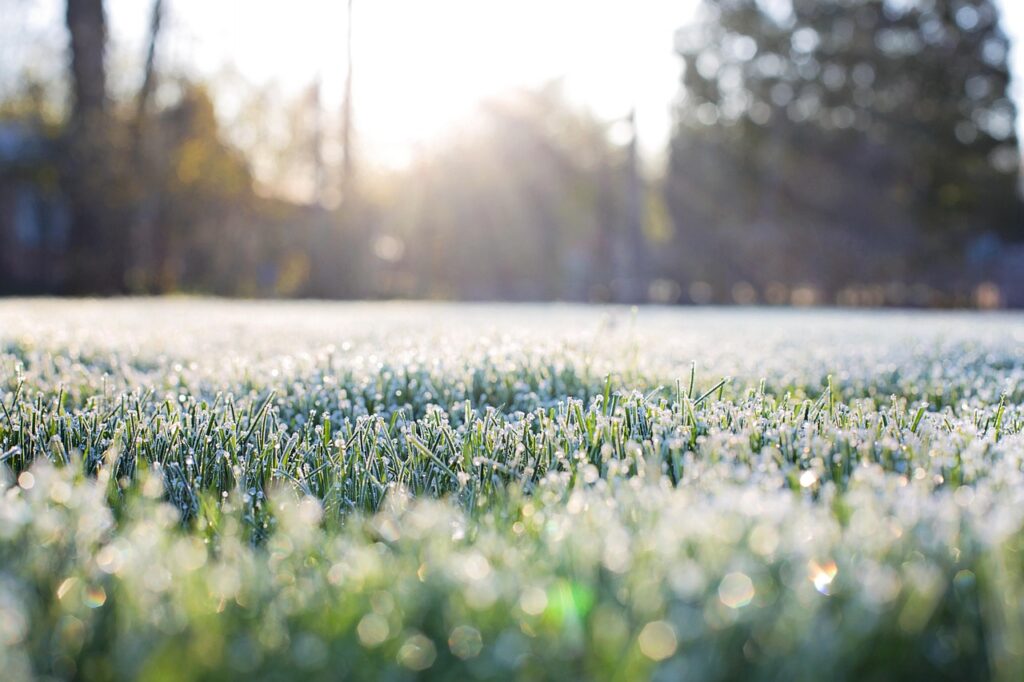
A crisp frost might make a lawn or sports field look good, but frozen grass is much more vulnerable to damage than it appears.
After some hard frosts across Canterbury, it’s worth understanding what actually happens to turf when it freezes, and why a little patience on cold mornings can help prevent unnecessary damage.
What happens to grass when it freezes?
Grass contains water within its plant cells. When temperatures drop below freezing, that water can freeze and the grass blades become rigid and brittle.
Under normal conditions, a grass blade will flex when it is walked or driven over. When frozen, it loses much of that flexibility. Pressure from boots, tyres, machinery or equipment can damage the frozen plant tissue instead.
That’s why grounds crews will generally avoid mowing or driving machinery over heavily frosted turf until it has had a chance to thaw.
It’s not just mowing that causes damage
Mowers are an obvious source of pressure, but ordinary foot and vehicle traffic can also damage frozen turf.
This is particularly relevant on busy sites such as schools, sports facilities, commercial properties and other public or shared spaces. The same routes are often used repeatedly – across the corner of a field, between buildings, alongside a car park or from a driveway to an entrance.
On a frosty morning, repeated traffic over these areas can leave visible tracks through the turf.
Why doesn’t the damage show straight away?
One of the less obvious things about frost damage is that it may not be immediately apparent.
The grass can look relatively normal while it is still frozen. Once it thaws, damaged plant tissue can begin to discolour, leaving brown, blackened or bruised-looking footprints, wheel tracks or worn areas.
Recovery will depend on the severity of the damage, the type and condition of the turf, and the weather and growing conditions that follow. During winter, when grass growth is naturally slower, damaged areas can also take longer to recover.
How can frost damage be reduced?
The simplest approach is to minimise unnecessary traffic over heavily frosted turf until it has thawed.
For larger or frequently used sites, that might mean:
- delaying mowing or other machinery work until later in the day
- directing staff, contractors or visitors towards paths and hard surfaces where practical;
- avoiding vehicle movements across frozen grass; and
- paying particular attention to high-traffic areas where repeated damage is most likely.
Not every frosty morning will result in significant turf damage, and sometimes access simply can’t be avoided. But where there is flexibility, allowing frozen turf to thaw before putting it under pressure can help maintain healthier, better-looking grass through winter.
Winter turf management in Canterbury
Frost is simply part of managing outdoor spaces through a Canterbury winter. Good turf management means responding to the conditions rather than following the same maintenance programme regardless of the weather.
Small decisions – including when to mow, when to keep machinery off a site and when to give frozen turf a few extra hours to thaw – can make a noticeable difference to turf condition over the season.
NatureBase provides grounds maintenance and sports turf services across Canterbury, working with schools, commercial properties, councils and other organisations to maintain safe, functional and well-presented outdoor spaces throughout the year.