
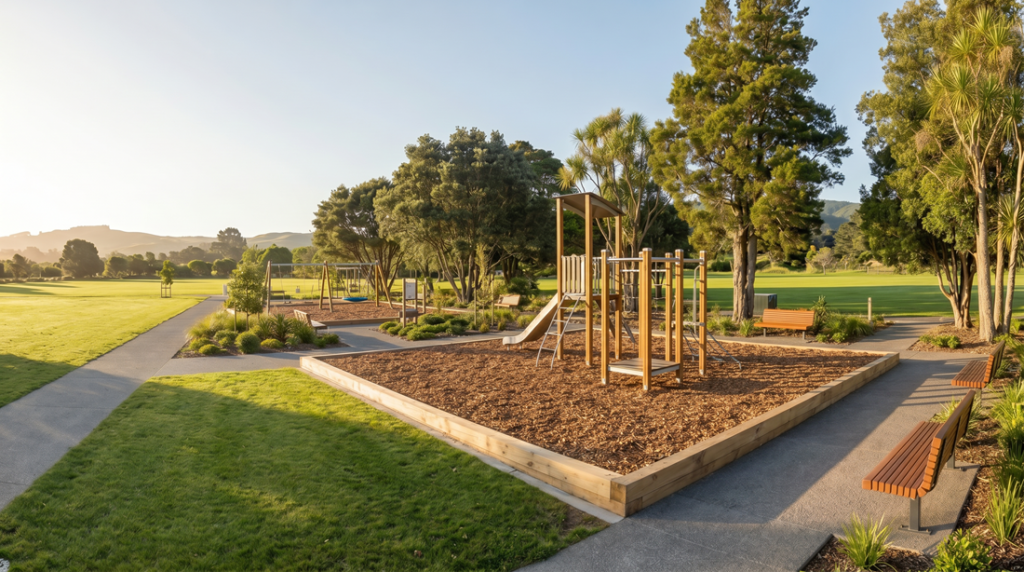
Playground projects are exciting projects to be involved in, but they can also be more complicated than people initially expect. There are usually multiple parties involved across design, compliance, installation and ongoing maintenance. Getting the process right early on can save a lot of time, cost and rework later on.
We’ve recently had a few conversations about new playground developments and upgrades, so I thought it would be useful to put together a simple overview of what a typical playground installation process looks like from start to finish.
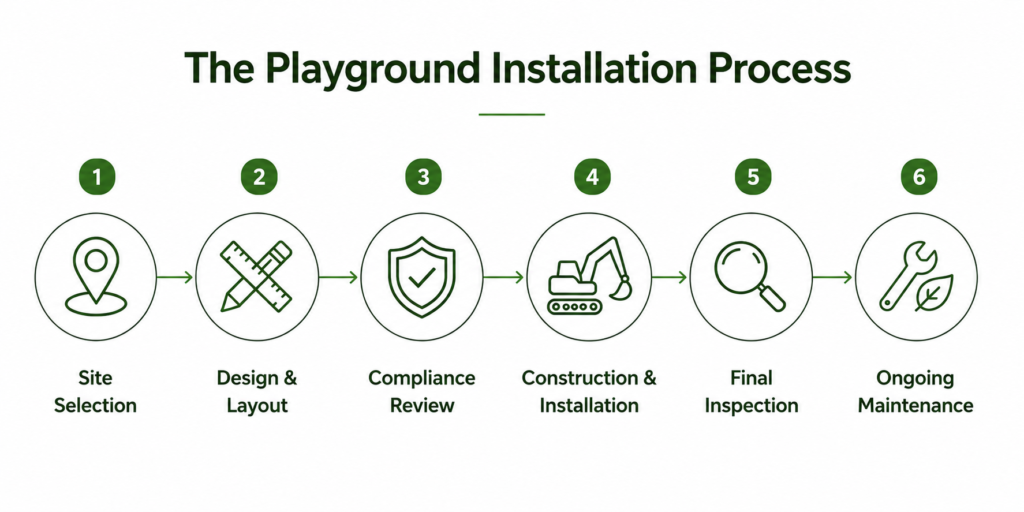
1. Site Selection
This might sound obvious, but the step is selecting the location and – importantly – understanding the site constraints. A good playground is about more than just available space. Things like drainage, visibility, access, surrounding activities, underground services and future maintenance should all be considered early in the process. It’s also important to think about the following factors in the initial process:
- who will be using the playground
- the age groups involved
- accessibility
- sun and shade
- how the space connects with the surrounding area
Good planning at this stage usually makes the rest of the project run smoother.
2. Design and Layout
Once the site is confirmed, the next step is to develop the layout and design. This is usually undertaken by a landscape architect or playground designer who can help balance important design and safety elements, such as: play value, circulation and accessibility, equipment selection, compliance requirements, safety clearances and overall functionality of the space. A well-designed playground should not only look good but also work well operationally and be practical to maintain long term.
3. Compliance Review
Before construction begins, the design should be independently reviewed for compliance with relevant New Zealand playground safety standards, including NZS 5828. This step is important because playground standards contain quite specific requirements around aspects such as fall zones, equipment spacing, platform heights, entrapment risks, handrails and surfacing requirements.
Undertaking a compliance review before construction helps identify issues early, rather than discovering them once equipment has already been installed.
4. Construction & Installation
Once the design has been finalised and reviewed for compliance, contractors can then be engaged to complete the work. There may be a range of contractors involved, depending on the project. Coordination between contractors is important, particularly around sequencing, site access and ensuring the finished playground aligns with the approved design and compliance requirements. Playground construction typically involves a range of processes including site preparation, excavation and foundations, equipment installation, edging and drainage works, landscaping and softfall installation. Softfall installation is particularly important to get right, as surfacing depth and materials need to match the equipment and required fall heights.
5. Final Inspection
Before the playground is opened, a final inspection should be completed to confirm the playground has been installed correctly and complies with the relevant standards. This final signoff helps to ensure the playground is safe, compliant and ready for use.
6. Ongoing Maintenance
The project doesn’t stop once the playground opens. Routine inspections and ongoing maintenance are critical to keeping playgrounds safe and extending the life of the equipment and surfacing.
Over time, issues can arise such as general wear and tear, loose components, softfall degradation, vandalism and drainage issues. These can all impact playground safety and usability. Regular inspections help identify issues early and support forward planning for maintenance and renewals.
Good playground projects involve a lot more than simply installing equipment. The best outcomes usually come from having the right people involved early, understanding compliance requirements from the start, and thinking about long-term maintenance and operation, not just construction day.
At NatureBase, we support playground projects through installation, compliance inspections and ongoing maintenance across Canterbury and the South Island.